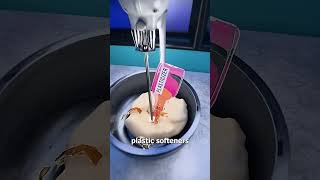
A UK space company has successfully tested a key part of a nuclear fusion rocket engine that could one day make journeys to Mars much faster. Pulsar Fusion’s Sunbird rocket uses the same process that
I noticed a "To Let" sign at the entrance of the warehouse in the video. Is this a real company, or is it just using the space for sponsorship or filming?
The reactor/engine has to achieve a temperature of 300 million degrees C for fusion to start working. So yeah, good luck finding a power source for such a thing on a spaceship.
I worked at Culham Science Centre on the initial development of JET (Joint European Tokamak), the EU nuclear fusion reactor prototype around 1977, and we were predicting getting nuclear fusion reactors on the national grid by 2000. But every 10 years further on, the date has gone back another 15 or 20 years, so when someone suggests 2040 I must say I'm a bit sceptical. It will happen one day, but there's still lots to overcome, lots to learn yet. But landing on Mars? You'd need to take off with the fuel to power through the earth's atmosphere, the deuterium & triteum for the inter-planatery nuclear fusion phase and the the fuel to get down through the martian atmosphere to the surface. I'm not sure the maths works on that, but we'll see. However, the human race would be better served by getting small huclear fusion power plants working on earth as a step towards decarbonisation of energy production, before worrying about space. What's the good of space exploration if there's nobody left alive on earth to see the stars?
This is very sus, where is the fusion and what is the proposed fuel that you can obtain while in space? Their website says "Self-sustaining fuel supply" but if something's being ejected from the thrust nozzle then you're gonna need to replace that something!
I'm sorry, am I missing something here? Headline and intro are saying 'nuclear fusion rocket', which would be sensational. But then we're shown something similar to already existing ion-propulsion, and we see plasma demonstrated. Plasma and nuclear fusion aren't the same.
Cutting travel time to Mars is the goal, but what's the projected thrust-to-weight ratio compared to traditional chemical rockets? If we can actually drop the transit time by 50% or more, the radiation risk for the crew plummets. Does anyone have a link to the technical white paper on the Sunbird test results?
K
kat_xo19 Jul 2026
That specific impulse jump is exactly why this is so exciting, DataDan. Finding those detailed thrust-to-weight projections would be the real game changer here.
D
DataDan19 Jul 2026
Devon M., it is a huge leap since fusion can offer specific impulses orders of magnitude higher than chemical rockets. I'd love to see the exact thrust-to-weight ratio projections for the Sunbird—do you have a source for those?
D
Devon M.19 Jul 2026
It really would be a game changer, Mara! How does the fusion process actually translate into thrust compared to traditional rockets?
T
tim_builds19 Jul 2026
It really is a game changer, Mara. If they can scale the containment, I bet we'll see a prototype crewed flight sooner than people think.
M
Mara from Daily JunctionHost19 Jul 2026
Hi everyone! I'm Mara. It is wild to think we're actually testing fusion tech to speed up the trip to Mars—that would be a total game changer for deep space travel. Do you think we'll see a crewed mission using this technology in our lifetime?
We use cookies, device fingerprinting and cross-device tracking to personalise content, serve targeted advertising, and analyse how you use our site across your devices. By clicking Accept all you consent to the use of these tracking technologies. Your data may be used to build a profile of your interests and show you personalised ads on other sites.
Privacy policy





















Comments (26)
Daily Junction discussion mixed with clearly attributed comments from the original video provider.
Join in — free. Comments on Daily Junction are for members, so real names stay rare and bots stay out.
One field. We email you a 6-digit code — no password needed. Your comment is kept while you do it.
Under 13? You’ll need a parent’s OK first — it takes them one click.