It's the craziest city in China. In Shenzhen, drones deliver burgers to you in the middle of the street, driverless cars transport packages, "R2-D2" type robots take the elevator in hotels to do room
I noted some contradictions in the info. For example, at one point they claim a reduction in the crime level. Later in the video, you show one incident that should be considered major when people are injured or even killed. If that incident is removed from the records, and many others like that, how could they know the level of reductions in the crime rate ?
The same goes for the criticism of the president or the party. If it is not allowed in public discourse, how would they know what people don't like and where they could improve what people need ?
Before drone deliveries, I had the notion that someone would be controlling it with their xbox style controller from and to the destination and back. With GPS and AI being able to navigate itself far better than any person could, we're entering a new dawn of technological evolution. It is still pretty wild to think about it.
However, Chinese people don't really care whether Shenzhen is regarded as a tech city. Foreigners seem to pay more attention to this, while Chinese people simply don't care at all.
I was there last week and it was great. The robots were incredibly friendly and welcoming. The hospitality was excellent, though I still have not encountered any actual humans or used any human-run services there, so I cannot really comment on how the humans function. Hopefully I will get that rare experience next time.
This is a fascinating look at Shenzhen, but the most interesting part for me wasn't the tech—it was the narrative structure.
I noticed a very specific 'road' the documentary takes:
The Hook: It starts with 'heroic' 4K shots and upbeat music for drones and taxis to build curiosity.
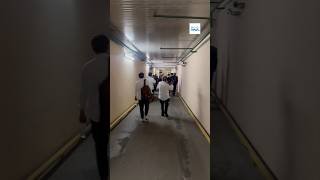
The Shift: Then, it slowly moves into 'shaky-cam' phone footage and low-frequency ambient tension when showing security rooms to make them feel inherently sinister.
The "Glass Ceiling" Admission: It features a local robotics engineer who admits China "can't beat America yet" because they lack the fundamental research and high-end chips like Nvidia. This feels like a strategic choice to lower the "threat" level for a Western audience, suggesting that even this "futuristic" city is still fundamentally behind
The US-Link: It repeatedly mentions American education or Western AI (like ChatGPT) to suggest the 'futuristic' success is still anchored in the West.
The Comment Section: It's wild to see how even simple positive 'wow' comments are immediately policed and labeled as propaganda. It ensures the 'dystopian' warning is the only voice left standing.
It feels like a masterclass in 'narrative steering'—
My phone got stolen in Worcester Massachusetts and a week later when it was finally trackable this is where it ended up.
We use cookies, device fingerprinting and cross-device tracking to personalise content, serve targeted advertising, and analyse how you use our site across your devices. By clicking Accept all you consent to the use of these tracking technologies. Your data may be used to build a profile of your interests and show you personalised ads on other sites.
Privacy policy


















Comments (20)
Daily Junction discussion mixed with clearly attributed comments from the original video provider.
Join in — free. Comments on Daily Junction are for members, so real names stay rare and bots stay out.
One field. We email you a 6-digit code — no password needed. Your comment is kept while you do it.
Under 13? You’ll need a parent’s OK first — it takes them one click.
The same goes for the criticism of the president or the party. If it is not allowed in public discourse, how would they know what people don't like and where they could improve what people need ?
I noticed a very specific 'road' the documentary takes:
The Hook: It starts with 'heroic' 4K shots and upbeat music for drones and taxis to build curiosity.
The Shift: Then, it slowly moves into 'shaky-cam' phone footage and low-frequency ambient tension when showing security rooms to make them feel inherently sinister.
The "Glass Ceiling" Admission: It features a local robotics engineer who admits China "can't beat America yet" because they lack the fundamental research and high-end chips like Nvidia. This feels like a strategic choice to lower the "threat" level for a Western audience, suggesting that even this "futuristic" city is still fundamentally behind
The US-Link: It repeatedly mentions American education or Western AI (like ChatGPT) to suggest the 'futuristic' success is still anchored in the West.
The Comment Section: It's wild to see how even simple positive 'wow' comments are immediately policed and labeled as propaganda. It ensures the 'dystopian' warning is the only voice left standing.
It feels like a masterclass in 'narrative steering'—